

 Tyler McFarland on July 28, 2026
Updated on July 28, 2026 Reviewed and fact-checked Found a mistake? Let us know!

Are you looking to boost your daily nutrient intake with fresh, vibrant juices on a plant-based diet?
Choosing between a cold press juicer and a centrifugal juicer is one of the most important decisions you will make for your vegan kitchen routine.
While both machines turn fresh fruits and vegetables into delicious liquid nutrition, they operate on completely different technology.
In this guide, we break down the scientific differences, juice yield, cleaning efforts, and cost to help you pick the perfect machine for your lifestyle.
If you are exploring new ways to thrive on plants, check out our beginner’s guide to a plant-based diet and explore our favorite essential vegan kitchen tools.
Quick Comparison: Cold Press vs. Centrifugal Juicers
Cold press juicers extract maximum nutrient density, higher juice yield, and longer shelf life using slow crushing augers, while centrifugal juicers prioritize high speed and low upfront cost using fast spinning blades, making cold press ideal for daily health-focused juicing.
| Feature | Cold Press (Masticating) | Centrifugal Juicer |
|---|---|---|
| Extraction Method | Slow auger crushing & pressing | Fast spinning metal blade & mesh filter |
| Operating Speed | 40 – 120 RPM | 6,000 – 15,000 RPM |
| Heat & Oxidation | Minimal heat, virtually zero foam | Friction heat, high air incorporation |
| Juice Yield | High (up to 92% yield on produce) | Moderate to low (leaves damp pulp) |
| Leafy Greens Efficiency | Exceptional (kale, spinach, wheatgrass) | Poor (blows leaves into pulp bin) |
| Raw Shelf Life | 72 hours (3 to 5 days refrigerated) | 24 hours max (best consumed immediately) |
| Average Cost | $150 – $500+ | $50 – $150 |
What Is a Cold Press (Masticating) Juicer?
A cold press or masticating juicer utilizes a slow-rotating auger to crush, chew, and press fruits and vegetables against a fine screen, extracting dense juice without generating friction heat or introducing excessive oxygen into the liquid.
Masticating juicers mimic a chewing motion—hence the name “masticating.”
Because the auger turns at a gentle speed of 40 to 120 RPM, no significant heat is generated during the extraction process.
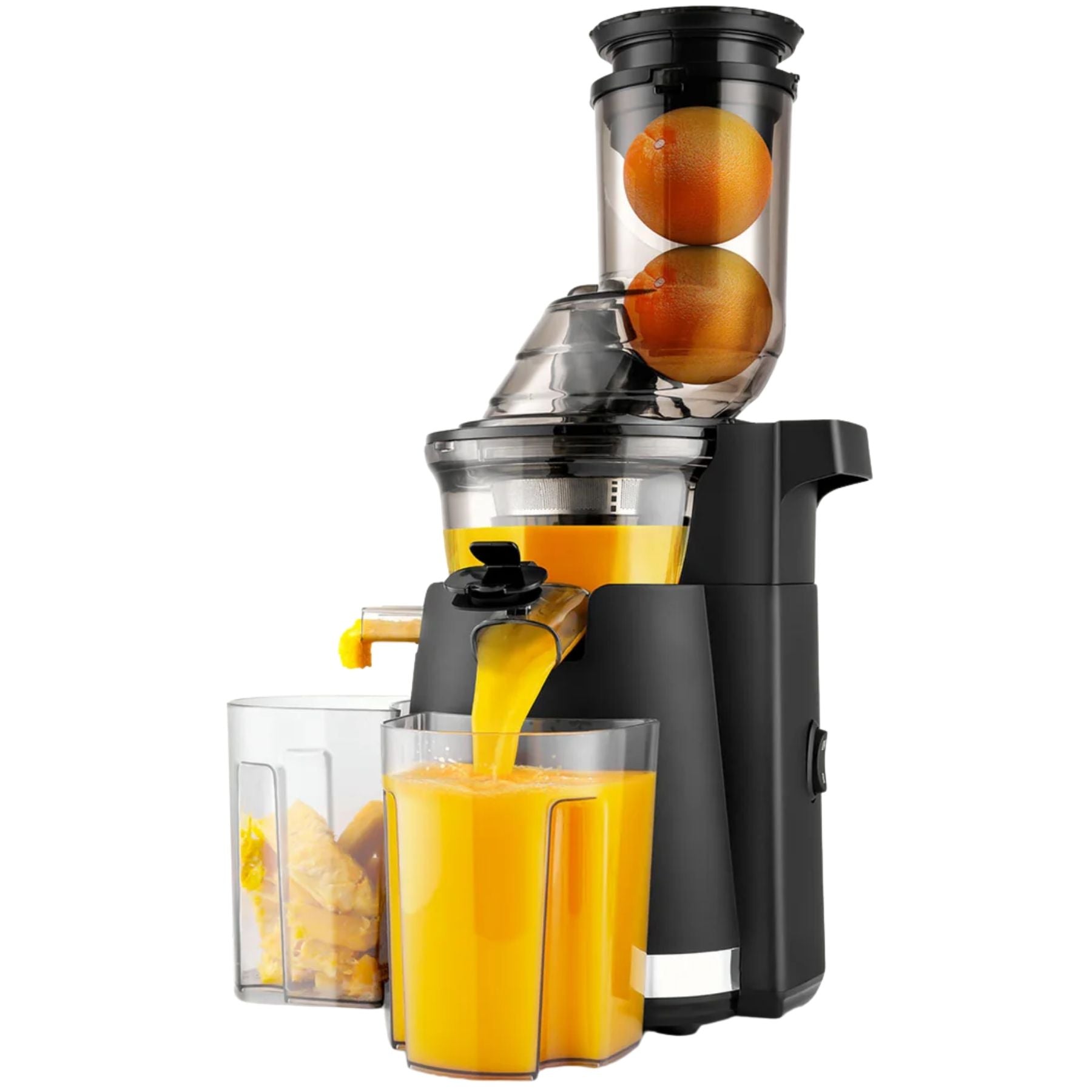
This gentle squeezing action breaks down plant cell walls thoroughly, releasing deeply trapped micronutrients, trace minerals, and living enzymes.
The resulting juice is thick, rich, vibrant in color, and virtually free from foam or froth.
Pros of Cold Press Juicers
- Maximum Nutrient Retention: Preserves sensitive Vitamin C, Folate, and delicate antioxidants.
- Superior Juice Yield: Extracts significantly more liquid per pound of produce.
- Handles Leafy Greens with Ease: Efficiently juices kale, spinach, herbs, and wheatgrass.
- Quiet Operation: Runs quietly without disturbing your household in the morning.
- Longer Shelf Life: Raw juice stays fresh for up to 3 to 5 days in the fridge.
Cons of Cold Press Juicers
- Higher Initial Price: Quality home units range from $150 to $400+.
- Slower Prep Time: Smaller chute sizes mean you must chop produce into smaller pieces.
- Slower Juicing Speed: Takes a few extra minutes to process a full batch.
What Is a Centrifugal Juicer?
A centrifugal juicer uses a flat spinning blade surrounded by a mesh strainer that spins at ultra-high speeds, shredding produce instantly and using centrifugal force to push the extracted juice through the micro-mesh into your glass.
Centrifugal juicers are the most common household juicing appliances on the market today.
They process whole apples, carrots, and cucumbers in seconds thanks to wide feed chutes and high-speed motors.
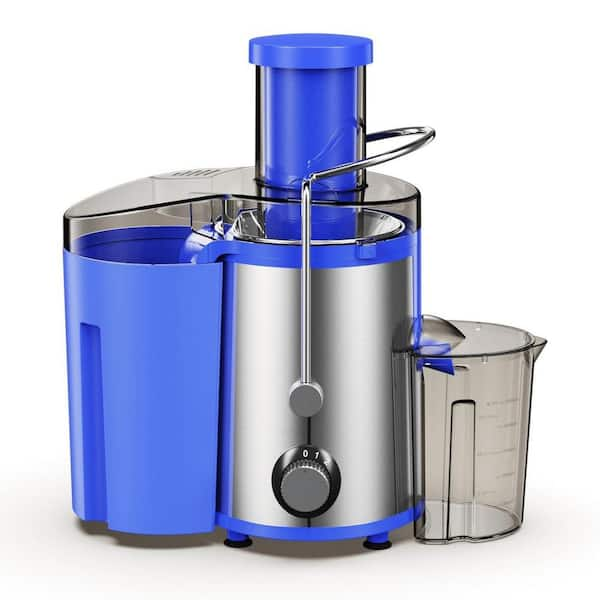
However, the internal disc spins between 6,000 and 15,000 RPM, pulling vast amounts of surrounding air into the juicing chamber.
This rapid air incorporation causes swift oxidation, creating a thick layer of surface foam and separating the liquid quickly.
Pros of Centrifugal Juicers
- Lightning-Fast Speed: Makes a fresh glass of juice in under two minutes.
- Minimal Chopping Required: Wide chutes fit whole apples and large citrus halves.
- Budget-Friendly: Entry-level models start around $50 to $100.
- Simple Setup: Easy to assemble and straightforward to use.
Cons of Centrifugal Juicers
- Rapid Oxidation: Must drink immediately to prevent rapid nutrient loss.
- Wasteful with Leafy Greens: High speeds fling light greens into the pulp bin without extracting much juice.
- Loud Operation: Sounds similar to a high-powered kitchen blender.
- Lower Yield: Leaves wet, heavy pulp behind, wasting valuable produce.
Nutrient Retention, Yield, and Shelf Life Compared
Peer-reviewed testing demonstrates that cold press juicers retain up to 15% more nutrients, 3 to 5 times more polyphenols, and yield up to 92% more juice compared to centrifugal extraction methods.
When you invest in organic fruits and vegetables, you want to extract every drop of biological value.
A landmark study published in the journal Food Science and Engineering evaluated cold press versus centrifugal extraction.
The research revealed that cold pressing yields 92% juice from pineapples compared to just 47% with centrifugal extraction.
Additionally, research published in Food Chemistry verified that cold-pressed juices retain 3 to 5 times more polyphenols and significantly higher antioxidant activity.

Laboratory stability tests by equipment researchers showed that after 72 hours of refrigeration, cold-pressed juice retained virtually all its Vitamin C and Vitamin A.
Conversely, centrifugal juice lost over 46% of its Vitamin A within 3 days due to initial oxidation.
According to safety guidance from the U.S. Food and Drug Administration (FDA), fresh unpasteurized juice must always be kept under 41°F (5°C) to prevent bacterial growth.
If you love making batch green drinks, check out our guide on the ultimate celery juice routine for tips on storage.
Cleaning, Noise, and Everyday Practicality
Cold press juicers run quietly and extract more juice from greens, but centrifugal juicers offer faster prep times and dishwasher-friendly parts that suit busy weekday morning schedules.
While nutritional metrics favor cold pressing, everyday convenience plays a massive role in whether you will stick to your juicing habit.
Centrifugal juicers feature wide chutes that accept whole apples, unpeeled lemons, and full stalks of celery.
You can make a full pitcher of juice in 90 seconds flat.
However, scrubbing the mesh blade basket of a centrifugal machine requires immediate attention so pulp does not dry inside the tiny holes.
Cold press juicers require more prep time up front because produce must be chopped into 1-inch pieces.
On the flip side, modern vertical masticating juicers feature silicone wipers that keep screens clean during operation, making cleanup quick and simple.
Which Juicer Should You Buy for Your Vegan Kitchen?
Choose a cold press juicer if you prioritize leafy greens, maximum yield, and batch prepping, or select a centrifugal juicer if speed, low budget, and zero prep time matter most.
To make the right choice for your kitchen, reflect on your daily workflow and budget.
Get a Cold Press (Masticating) Juicer if:
- You love green juices made from kale, spinach, celery, parsley, or wheatgrass.
- You want to prep juice in batches on Sunday to drink throughout the work week.
- You want to get the highest possible yield from expensive organic produce.
- You dislike loud appliance noise early in the morning.
Get a Centrifugal Juicer if:
- You have a tight budget under $100.
- You only have 5 minutes in the morning to make juice and run out the door.
- You primarily juice hard roots like apples, carrots, beets, and ginger.
- You plan to drink your fresh juice immediately after making it.
Pair your daily juice routine with our delicious plant-based breakfast recipes to keep your energy high all morning long!
Frequently Asked Questions
Is a cold press juicer really better than a centrifugal juicer?
Yes, for nutrient density, enzyme retention, and juice yield. Cold press juicers extract up to 15% more vitamins and 3 to 5 times more polyphenols without generating heat or foam.
Can you juice celery and kale in a centrifugal juicer?
You can, but it is far less efficient. Centrifugal blades often shred leafy greens and fling them into the pulp bin before extracting their liquid, leading to waste.
How long does cold-pressed juice last in the fridge?
Stored in an airtight glass mason jar at or below 41°F (5°C), cold-pressed juice retains high nutrient levels for 3 to 5 days (up to 72 hours raw).
Why is centrifugal juice so foamy?
The high-speed spinning blades (6,000 to 15,000 RPM) force air into the liquid. This rapid aeration causes immediate surface foaming and accelerates oxidation.
I’m Tyler McFarland, the editor and main author here. When I first went vegan 13 years ago, convenience products like veggie burgers and soy milk were a lot harder to find. Now they’re everywhere!